
Moby Dick: Once Frivolous, Now Unfathomable
100 years after its first film adaptation, Moby Dick shows us an unrecognizable world.
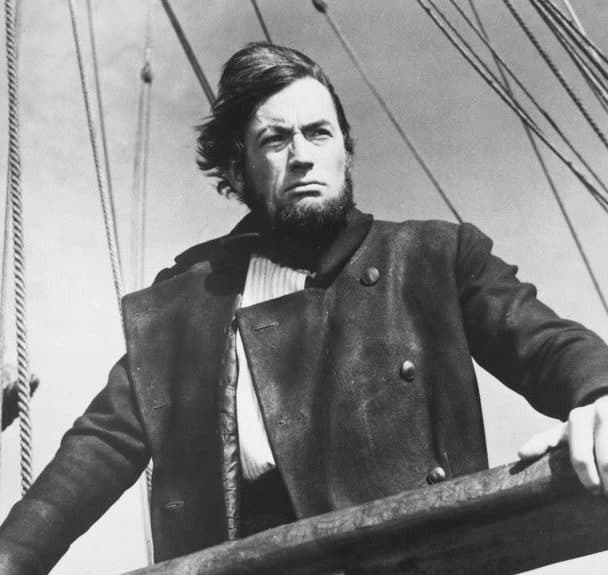
Renowned American author Herman Melville didn’t exactly take the world by storm when Moby Dick was first released in 1851, but the whaling classic has continued to stand the ultimate test of time. Tender-spoken narrator Ishmael whimsically guides us along the quest for Moby Dick as eccentric Captain Ahab lusts after the white whale who viciously stole his leg and his pride. Melville whisks us from the bustling historic streets of New Bedford aboard the diverse crew of the Pequod, setting sail for the deep ocean in search of the great whale and its many riches, but most importantly, the glory. Even more, Moby Dick is perhaps Melville’s truest tale, largely inspired by his very own experiences aboard whaling expeditions.
The Pequod traverses the entire globe during its chase of the white whale, casting off from New Bedford, drifting south along the Atlantic Ocean, around the coast of Africa and into the Indian Ocean, darting through the islands of Southeast Asia and finally into the deep Pacific, where its voyage came to an end at the hand of Moby Dick. Each passing day on the boat brings a new juxtaposition of human experience, mixing extraordinary personalities like the cannibalistic Queequeg with stubborn mates like Flask or the naive Pip, all happening beneath the unstable powder keg that is cruel Ahab. The Pequod’s ragtag gang meets a variety of curious characters on the open water, like the cautious Captain Boomer, who also lost a limb to the dreaded white whale, and Captain Gardiner of The Rachel, who prophetically ended up saving Ishmael, the Pequod’s sole survivor.
Nearly two hundred years after Melville chronicled the events of Moby Dick, we look back on an unrecognizable world. In today’s day and age, what could compare to the sheer outlandishness, yet sanctity, of the whaling voyage? What experience could possibly push us out of our comfort zones that we have so comfortably retreated into, shielded by our endless network of devices, and to completely rely on the bounties of nature and the instincts of our crew? Especially, I would argue, at a time in history when we have limitless potential at our very fingertips, exploration from the sanctity of our beds. As I am undergoing my fourth year at the University of Pittsburgh, the biggest and most challenging transitional period of my life thus far was when I moved to college. Even though it was such a monumental change, and in a sense my 21st-century version of a whaling adventure, by no means have I spent the last three years stranded at sea with the likes of the vicious Captain Ahab.
A multi-year expedition awaits the brave souls daring to whale, casting out to sea on a boat surrounded by strangers, each day bringing new beginnings, old work, and frequent bouts of insanity, all in search of these enormous creatures, who are tracked, chased down, harpooned, killed, thrown about like a rag doll, chopped up, dissected, drained of every last possible ounce of value to mankind, and then cast aside, the rotting carcass left for the vulture-like sharks, slowly drifting down into the abyss of the dark sea.
And yet, whales are regarded with the highest maritime honor, hailed as the noble kings of the sea, a targeted resource for bountiful meat, blubber, oil, and more. The more we see Ahab chase down whale after whale in search of the white holy grail, the more Melville shows us the humanity of the whale, a simple, beautiful creature that is terrorized by the greed of mankind. Melville spins dazzling yarns describing the stunningly solemn beauty of the whales:
“Through its inexpressible, strange eyes, methought I peeped to secrets which took hold of God. As Abraham before the angels, I bowed myself…”
(Ch. 42: The Whiteness of the Whale, p.158).
“Lit up by the moon, it seemed celestial; seemed some plumed and glittering god uprising from the sea.”
(Ch. 51: The Spirit-Spout, p.193)
“Thus, while in life the great whale’s body may have been a real terror to his foes, in his death his ghost becomes a powerless panic to a world.”
(Ch. 69: The Funeral, p.257-258)
I have never been out on the open water before, stranded above the endless ocean. I have only been out of the country once before, young and surrounded by older, more sure family members. I have never slept in a bed spooned by a cannibal I just met, or clung to a coffin spinning down a whirlpool, or met the fierce gaze of a beast as majestic as the whale. Am I just boring? Are our lives simply less adventurous?
“No dignity in whaling?... Here, I prospectively ascribe all the honour and the glory to whaling: for a whale-ship was my Yale College and my Harvard.”
(Ch. 24: The Advocate, p.93)
Melville’s lack of formal education still culminated in literary excellence through the evocative nature with which he viewed life, shaped in part by his experiences aboard whaling vessels. Portrayed through his characters and his scenes, Melville brings the whaling experience to life, truly understanding what he is telling — he lived it. Perhaps, the passion with which Melville gushes about the finest whale details comes from the spirit of telling a story that is his own.
Call me Ishmael, as I try to appreciate more of the active experience, the natural beauty of each passing moment — my moments — and less of an Ahab, chasing after an impossible end and an inevitable demise.