'Resident Evil' and the controversy of adaptations
How “Resident Evil” cements itself amongst other videogame adaptations
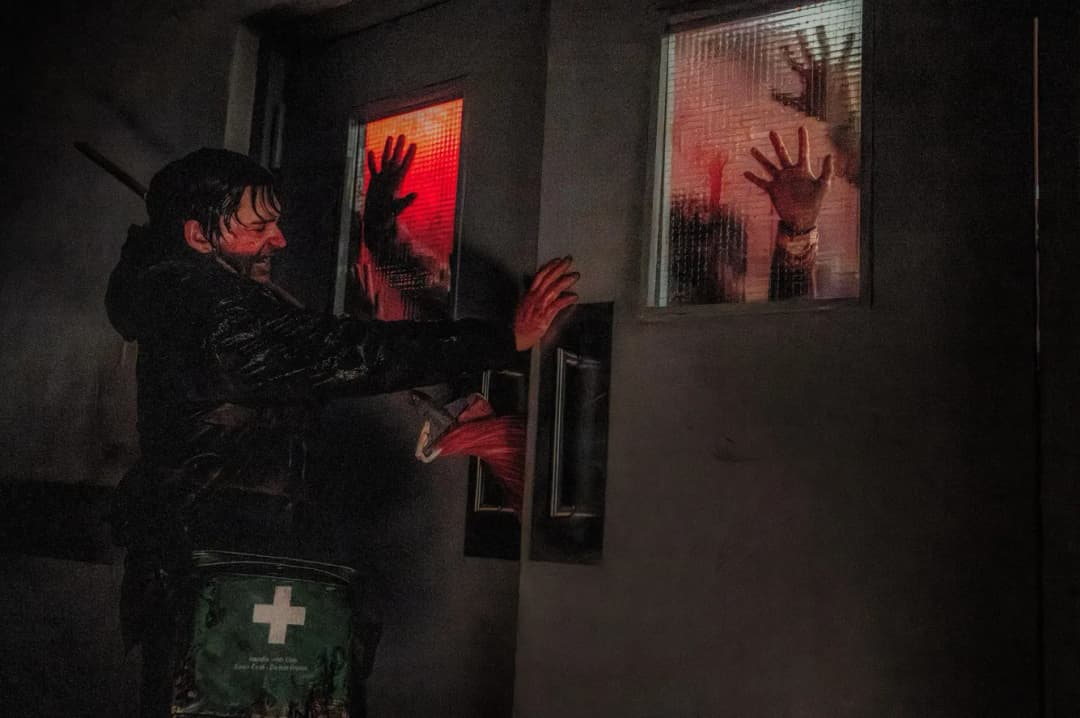
Zach Cregger’s “Resident Evil” film adaptation was a spectacle of entertainment, blending the horrific themes and absurd action the iconic video game franchise is known for into a live-action blast viewers can’t look away from.
“Resident Evil” debuted with a whopping 96% on Rotten Tomatoes and is one of the highest rated video game adaptations of the past decade. With the explosive popularity, and at times, controversy, surrounding video game adaptation movies like “A Minecraft Movie,” or shows like “The Last of Us,” it seems like a no-brainer that such an iconic franchise would jump on the trend.
For adamant fans, like myself, they know that live-action video game adaptations in cinema is not something new for the “Resident Evil” franchise.
What is new, though, is a successful one. The second highest rated live-action “Resident Evil” movie according to Rotten Tomatoes is “Resident Evil: The Final Chapter,” with a mere 39%.
Cregger, had a completely different outlook when shooting “Resident Evil” compared to other video game adaptations.
Other adaptations like “A Minecraft Movie” and “Borderlands” tell new stories with the already established and beloved characters. Yet, HBO MAX’s "The Last of Us” adaptation attempted to make a one-for-one recreation of the game's story in the format of a live-action series.
Cregger did something different entirely with his adaptation of “Resident Evil.” In an interview with Bafta, Cregger stated he wanted to create something new within the already established world of “Resident Evil,” without relying on any of the characters from the source material. However, Cregger wasn’t going to solely rely on the famed title. Instead, he sought other ways to make this movie not only feel like the adaptation of “Resident Evil,” but also feel like viewers are inside the beloved game.
One of the ways Cregger handled this was his emphasis on progression. “The Resident Evil” franchise has a huge emphasis on progressively rewarding the player with better weaponry to deal with increasingly difficult threats.
Not only does the film’s unlikely hero, Bryan, played by Austin Abrams, evolve and learn how to defend himself and survive the endless onslaught of monsters, his weaponry evolves too. The lead starts off with a small pistol, completely unaware of how to use it, threatened by a single infected. However, later in the movie, he wields three different firearms confidently, alternating between what situation, or monster, requires them.
Although, Bryan can’t just go guns blazing because in typical “Resident Evil” fashion, resources are incredibly scarce. Cregger methodically created scenes where the viewer could count every bullet, shell and magazine our protagonist has available. Not only did the ability to count his bullets feel incredibly faithful to the heads-up-display within the games, but it completely altered the viewing experience for me. It left a constant reminder that what Bryan has is finite and had me literally face palming when he would waste any of his valuable resources.
These weapons were Bryan’s livelihood and the sole reason he even stood a chance, and they were presented in such a way throughout the film where I couldn’t help but cheer when he found a new, more powerful one. These weapons even had their own point-of-view in numerous shots. A reminder of not only their importance, but also homage to the various first person perspective “Resident Evil” games.
Cregger’s iteration does a lot right, so where do other “Resident Evil” movies and other popular video game adaptations go wrong? Alexander Witt’s 2004 film, “Resident Evil: Apocalypse" is similar in some ways to Cregger’s, and direct opposite in others. Witt’s film does something interesting, as it retells the events of one of the games but with a twist. It includes its iconic Jill Valentine and Carlos Oliveira, but with a completely new movie-exclusive protagonist. It is a strange hybrid where, like Cregger’s, the film has a new protagonist but is different in that it shoves them within a preexisting story, with the writers seemingly modifying it as seen fit.
Regardless of the film's rating, modifying an already established and beloved story for a film is incredibly delicate with far more room for error. As someone who loved the original story of “Resident Evil 3,” the story the movie is retelling, I was not a fan. To me, it genuinely felt like someone just shoved their own original character in a film rather than them feeling like a believable part of the universe. I found myself comparing and contrasting the two, believing a one for one remake of the story would have been far better and more faithful to the game.
However, one for one remakes are just as delicate and the “The Last of Us” TV series proves just that. Rather than try to feel like a game within the franchise, it attempts to create a perfect retelling of the game’s story, with some slight altercations. A huge part of “The Last of Us” are its beloved characters, their relationships and the problems that arise between them. The show, although retelling these same stories, takes some creative liberty in dialogue, leaving the character’s connections and motives to feel altered.
The sensitivity of the dialogue is vital and it becomes especially uneasy to digest when it changes. To me, the show's iteration of the main characters, Joel Miller and Ellie Williams felt completely different from the source material. Both characters felt completely off, reacting and behaving drastically different from their video game counterparts. This had nothing to do with Pedro Pascal or Bella Ramsey’s performances, as it was written fundamentally different from the game. These felt like different characters, and yet the story played out the same. It didn’t feel believable or faithful to the show, with the plot occurring solely because the source material deemed it so. The show also has a situation where it completely changes the physical characteristics of one of the story's most important characters.
The sequel to the first game, “The Last of Us Part II,” has its lead antagonist, Abby Anderson, portrayed as an incredibly tall, strong and intimidating woman. All of these characteristics are integral to her journey and role in the story. Yet, the show flips this on its head, deliberately casting a much smaller actor.
In an interview with Entertainment Weekly, co-creator Neil Druckmann stated how Anderson’s bulky physique wasn’t necessary for the television version. This combined with the changes in dialogue stirred controversy, leaving a bad taste in viewers' mouths who simply wanted a faithful retelling of the video game's story.
Cregger’s “Resident Evil" steered clear of this potential controversy regarding changes by creating something entirely new within the world, focusing on it feeling believable rather than a one for one retelling. Because of it being a gamble and something new for adaptations due to its new story and characters, Cregger placed a huge emphasis on it feeling like the video game. He masterfully incorporated the feeling of progression as well as the constant fear of running out of resources.
With the success of “Resident Evil,” Cregger not only indirectly showed the delicacy of altering preexisting stories, but showed the importance of their worlds themselves.