Sundance Co-Founder Cirina Catania on Filmmaking
"A joyous life well-lived, that is our legacy."
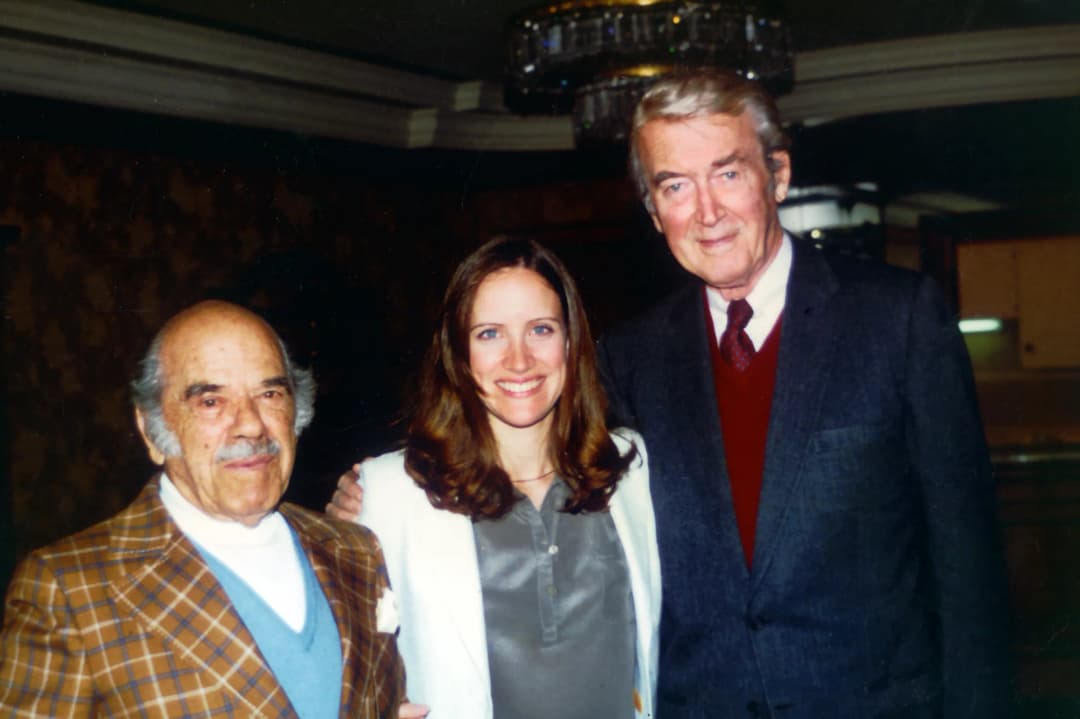
From left to right: Frank Capra, Cirina Catania and Jimmy Stewart
As the Sundance Film Festival spends its last January in Utah after 44 years, former director and co-founder Cirina Catania speaks with The Emblem Journal about the festival's formation and the future of independent film.
How did your interests and career path lead you to becoming a co-founder of Sundance Film Festival?
In the 1970s, our Utah friends were all passionate about filmmaking and the creative arts. Most notably, John Earle, Sterling Van Wagenen, and I were close, and we had many discussions about our goals and the kinds of filmmaking careers we hoped to build.
John worked as Director of the Utah Film Commission, and I came on board as Associate Director under Governor Scott Matheson. Sterling, also a film buff and respected young filmmaker, worked with Robert Redford’s production company, Wildwood Pictures.
It was a remarkable time in our lives, as we all immersed ourselves in something we genuinely loved: film.
At the time, I had been running a successful casting company, the only SAG-AFTRA and AFofM franchised agency in a tri-state area, which garnered attention in the local political community. Governor Matheson called me and asked if I would consider selling my business in order to help grow his efforts at the Utah Film Commission.
He knew I had worked closely with independent film companies in the area, including Chuck Sellier’s Sunn Classic Pictures, the prolific producer of groundbreaking low-budget independent films for television and theaters.
John was a great partner, strong, intelligent, and incredibly gentle, and I, in my outgoing, ever-enthusiastic manner, joined the team and began hitting markets where the film world was enjoying a true heyday. John and I were tasked with bringing more production to the state of Utah, and we worked daily with filmmakers throughout the United States to encourage them to shoot in “our” state.
Sterling, of course, had a mandate that was similar, only he aimed it at Redford’s productions.
We had many lively conversations about the business of film, its rewards, and its challenges. It seemed to us that a film festival would be a great idea, and although others told us not to pursue it, we did. We had no idea how challenging it would be—or how successful it would ultimately become.
I’d love to hear about your time as the former director of the festival and what it entailed. Did you have any specific goals for the festival’s impact? What are some lasting effects the festival has had on the film industry?
We started the festival because we felt very strongly that smaller regional filmmakers had no bridge to Hollywood. Their work deserved to be seen, and we wanted to help.
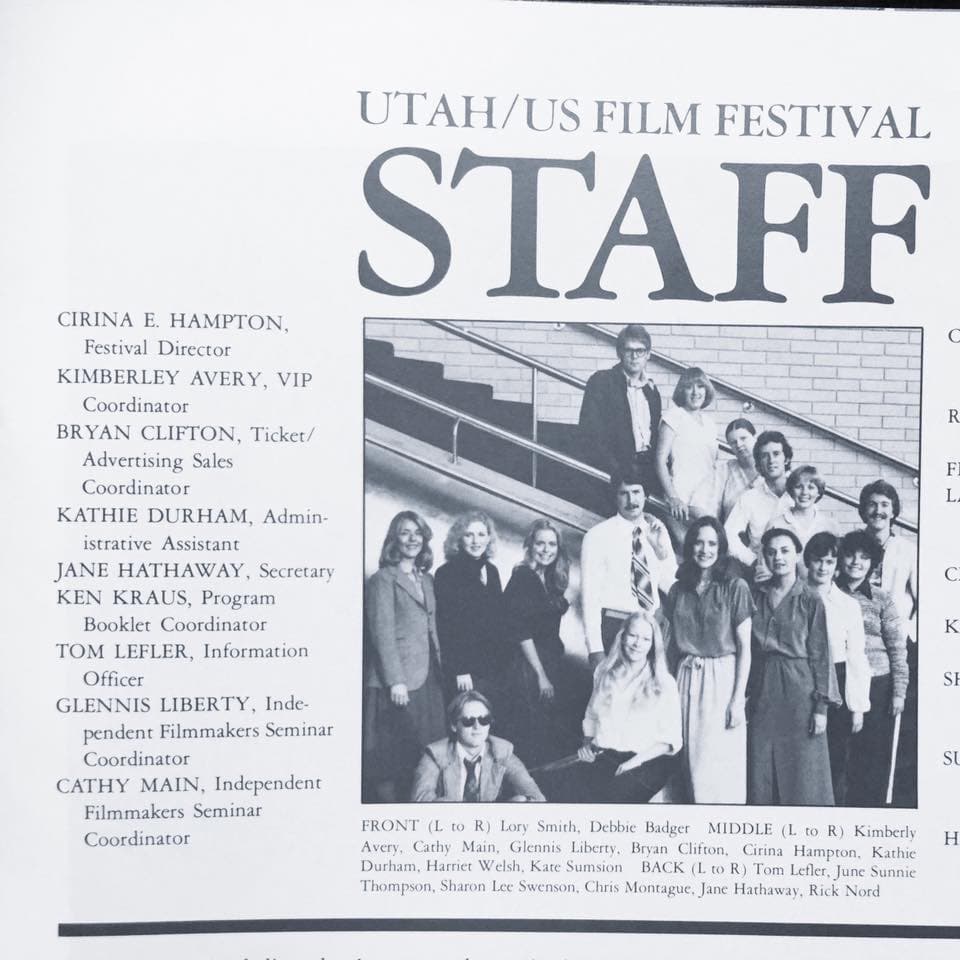
Cirina Catania stands third from left in the front row
These creative pioneers were struggling to make films using their parents’ credit cards, or scraping budgets together from friends, just to get their visions onto the screen in any way they could.
Thanks to an initial small group of people in Salt Lake City who agreed with us and rolled up their sleeves, we were able to raise enough money the first year through Utah state government support, cultural grants, and private donations - and we launched.
Sterling directed the festival in its first year, 1978, and I stepped into the director role in 1979 at a moment when the festival needed restructuring, fundraising, and a viable operating foundation. The first year had incurred debt, and the Board wanted to disband. However, Governor Matheson gave me a six-month leave of absence from the Utah Film Commission and continued to pay my salary so I could concentrate on reviving the festival and ensuring it could continue.
I dove into creating a Plan A and Plan B budget, finding in-kind contributions, securing free office space, and sourcing used furniture and equipment - anything we needed to keep the festival alive. Chuck Sellier donated money to help the bottom line, and Sharon Swenson wrote another grant. The state contributed again. Sterling and John kept things moving forward as well, and Lory Smith, our curator, jumped once again on the phones and located filmmakers across the country.
I can’t possibly name everyone in a short interview, but I hope they all know how grateful we are to them.
Our collective pioneer spirit prevailed. We launched with the help of our core staff, over 200 volunteers, and a 60-strong slate of original and retrospective films. Frank Capra came to support our efforts and awarded Jimmy Stewart with the first “Frank Capra Award,” and other celebrities followed suit.
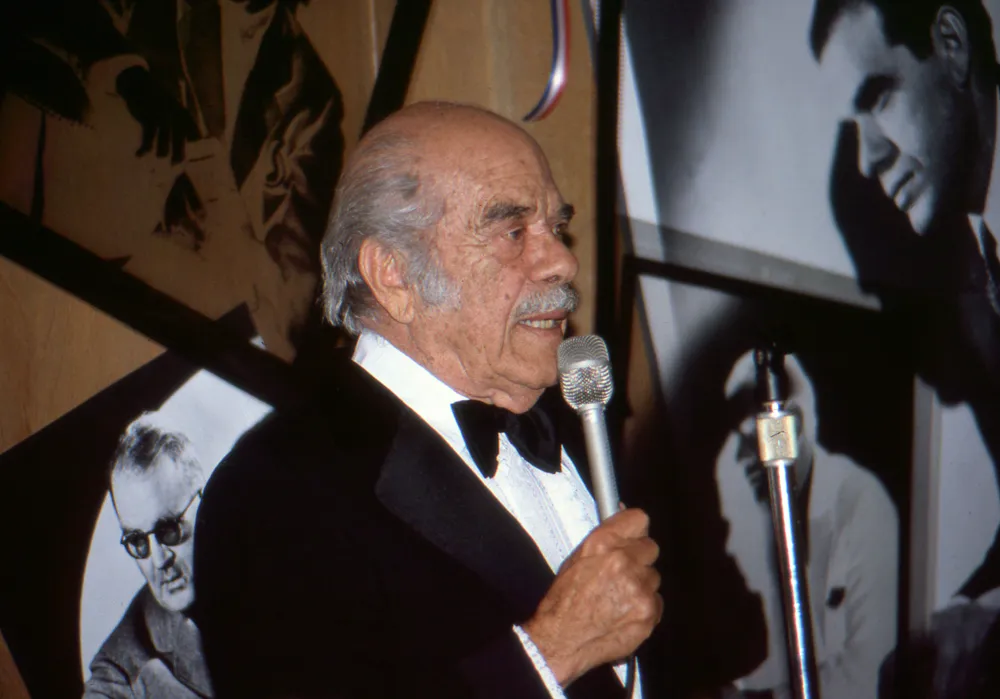
Frank Capra speaks at award dinner
Throughout your career, have you seen any major changes to the process of independent filmmaking or other creative industries in general? If so, have these changes affected the quality of work produced?
I have witnessed many changes throughout my life. Most notably, in filmmaking it was the transition from analog to digital.
The quality of work from the most talented and dedicated filmmakers has only gotten better. However, the quantity of content has increased dramatically due to the democratization of the process and the equipment. That accessibility is powerful, but it also makes the signal-to-noise ratio tougher. There is a lot of work out there that simply isn’t memorable.
Please note: it is not the equipment that is the issue. The shift is cultural. Filmmaking has become so accessible and so ingrained in our social structure that many people give themselves titles and create work that lacks vision, discipline, and persistent dedication.
Blackmagic Design recently approached me, offered to come in as a founding sponsor, and asked if I would start an organization to help young filmmakers. I am full-speed-ahead on that (in addition to my other work). It is heartwarming to meet teachers, professors, and students who, given an opportunity, are reaching into their hearts and souls to create something meaningful and wonderful.
What advice would you give to someone looking to start a career in the filmmaking industry?
Don’t wait. Figure out what you want to do and don’t let anyone else tell you, “No.” Find a mentor and work hard to learn everything you can so that when success does come, you will have a firm foundation.
For most of you, it will not happen instantly—so be patient. I firmly believe that the Universe puts us where we need to be at the right time.
Mostly, allow yourself time to feel the incredible joy that comes with following your heart. My motto is: “A joyous life well-lived, that is our legacy.” If you do all this, you will have an amazing life.
What creative projects would you say have been the most valuable experiences of your career?
There have been so many projects that I am grateful to have experienced: the early days in front of and behind the camera, Sundance, MGM/UA, United Artists with the James Bond films, Rocky IV, Rain Man, and so many films where I was on set every day, like Tombstone and Stargate.
Traveling the world with crew who become temporary families in remote, challenging locations is unforgettable. But working alone on projects for National Geographic or documentaries is rewarding in a completely different way. How do I choose?
The most important experiences of my career, whether large or small, built my confidence that I can do just about anything on a set, in prep, production, post-production, or the sales and distribution phase. That is comforting. And I’ve made many friends along the way.
What is a recent project you’ve been working on? Has the creative process involved in this type of project gotten easier or harder in recent years?
I never think about the creative process being hard. It is liberating to jump into that world every time I start something new.
I am active in the Producers Guild, Writers Guild, and IATSE, and I still work every day for clients, while also hosting podcast interviews for shows such as OWC RADiO. I write theatrical and television scripts for clients and consult on production and post-production. As mentioned previously, I also work daily, thanks to our sponsors, with students and teachers to help create career pathways for them.
My current full-length documentary, "Wounds We Carry: Beyond the Purple Heart," has been more than ten years in the making, and has brought me to locations across the United States and Europe (in between other projects). It is a multi-generational exploration of two warriors, one from the past and one from the present, and the effects of war on them and their families.
It is also an emotionally raw exploration of my search for the truth about my father, and my encounters with young Kionte Storey, a Marine forging a beautiful life after devastating wounds. The film is about service, sacrifice, and healing, but it is also about love.
Going forward, are there any ways you see the filmmaking industry changing in the next decade?
The more things change, the more they stay the same.
Everyone is talking about AI now, and yes, it will change the way we work, how many of us still work, and how many of us will develop new skills so we can continue to work. I am gratified that so many truly creative people do not rely on AI as a crutch, and are continuing to follow their own inner masters.
AI is powerful, but it isn’t human. It can’t replace conscience, intuition, or lived experience. Audiences want to feel. They want to trust us as creatives. They want us to give them hope and share our lives and the lives of our characters with them. Only then can they find escape, solace, and inspiration.
I will never stop working. Creation comes from a very special place, and I thank God every day that I have been given this life.
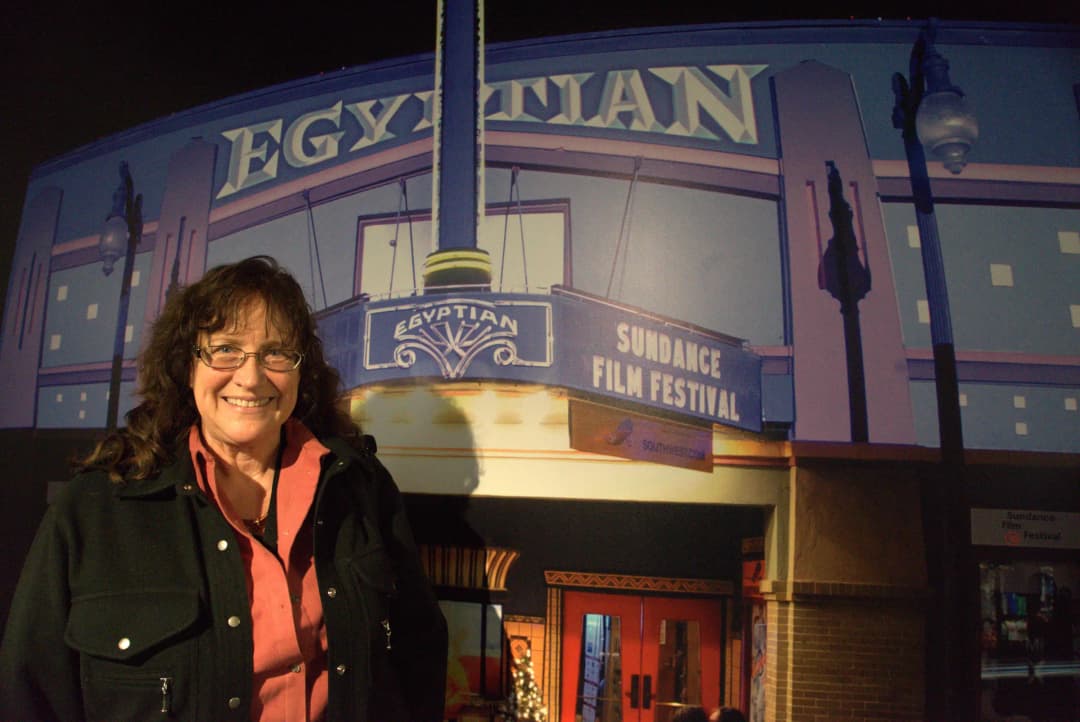
Cirina Catania in 2015
Sundance was started with one goal in mind: to help unknown and talented independent filmmakers in outlying areas of America. It offered a holistic and welcoming environment filled with like-minded people, where we could meet in coffee shops between films and trade ideas and solutions, even with major powers from Hollywood studios.
Over time, it has grown into something much bigger and has naturally evolved in ways that reflect the changing industry. But being able to pivot, find solutions, and create success in any circumstance is what makes us sustainable.
Look for the change, march in sync with your own version of the music, and success will find you.