
The cruel spectacle of "Primetime"
There is a very fine line between making something deeply disturbing and making something that simply wants you to feel disturbed.
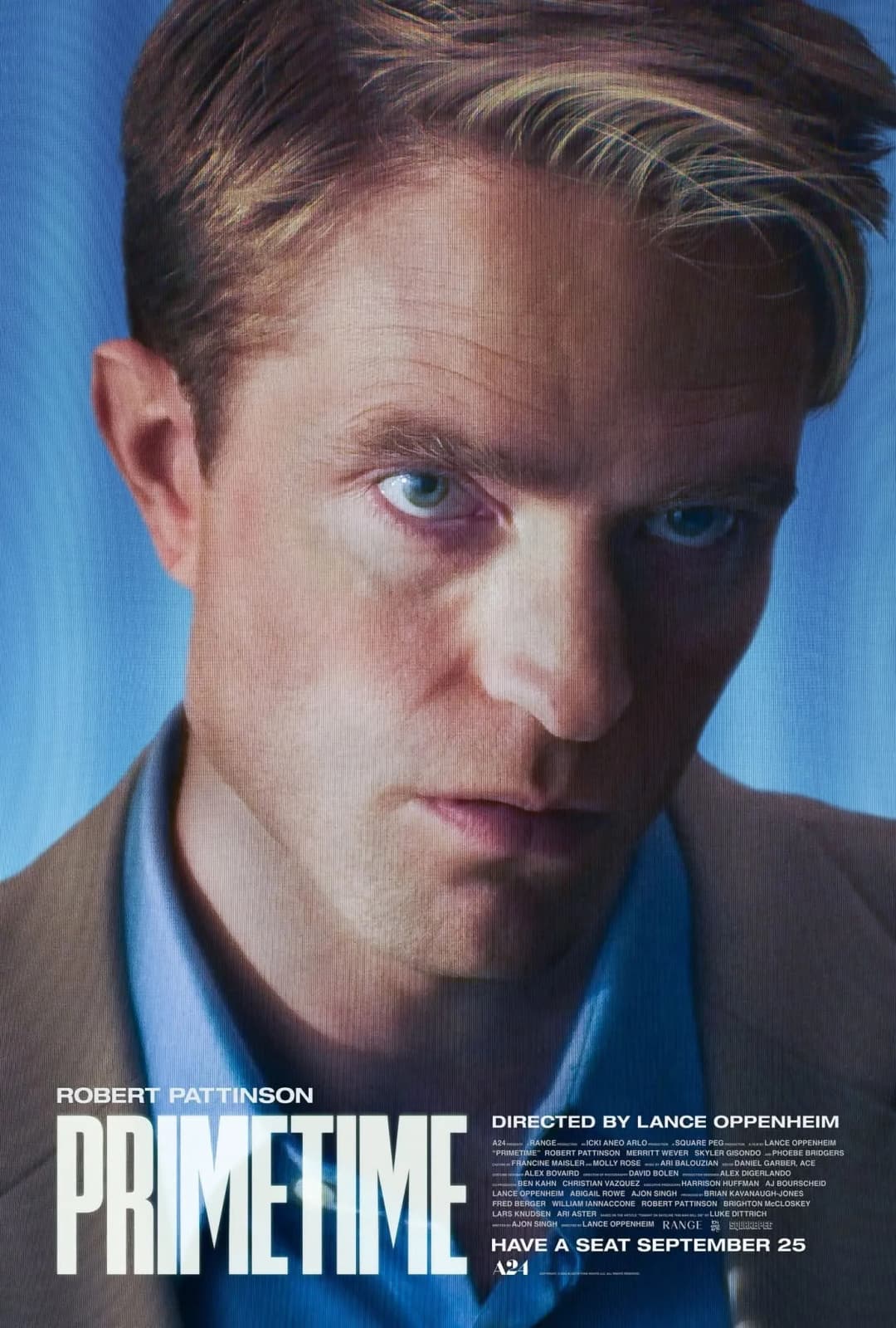
People have been doubting Robert Pattinson since he first graced our screens in “Twilight” in the 2000s. Personally, I’ve been #TeamEdward since 2009 and I was there defending Pattinson before all the film bros decided he was a serious actor after watching “The Batman.”
So, naturally, when I heard about “Primetime,” I was immediately intrigued. Directed by Lance Oppenheim, “Primetime” takes us back to 2006, when Chris Hansen, played by Pattinson, was trying to make “To Catch a Predator” into a television phenomenon. What begins as an investigation into adults attempting to sexually exploit minors becomes something much more.
As Hansen and his team work to expose these men, the film begins peeling back the layers of the operation itself. Behind the cameras are producers, decoys and network executives, all caught in a system where the pursuit of justice becomes increasingly tangled with the pursuit of ratings.
Going into the film, I had my reservations. Without a doubt, Pattinson is one of the most interesting actors working today, but I worried that the material might be too emotionally complicated to pull off without becoming overwhelming or, worse, exploitative. There is a very fine line between making something deeply disturbing and making something that simply wants you to feel disturbed.
I was a little less enthusiastic when I saw Phoebe Bridgers was making her acting debut as Del, an online decoy and actress who impersonates minors to lure suspects during operations for the television show. Don’t get me wrong, I love her music. But I am getting a little tired of seeing the same popular faces recycled into every corner of the entertainment industry. But, Bridgers absolutely blew me away.
She understood the role in a way that made me forget that I was watching someone whose music I already knew and loved. Her performance felt entirely connected to the film, rather than a celebrity cameo dressed up as an acting credit. That goes for the entire cast. Everyone seemed to understand the particular kind of discomfort “Primetime” was trying to create, and nobody felt like they were simply performing for the camera.
Which brings me back to Pattinson. There is something particularly satisfying about watching an actor outgrow the thing that made everyone recognize him in the first place. For Pattinson, that thing has been Edward Cullen for nearly two decades. And while I will defend “Twilight” until the end, I think it has taken far too long for people to recognize just how much Pattinson has to offer.
What makes him so fascinating is that he never seems interested in making his characters likable just because he is playing them. He lets them be ugly, pathetic and sit in their own contradictions without trying to rescue them from themselves. People sometimes forget that the same actor who played a sparkling vampire in a series of teenage romance movies can also make you deeply uncomfortable in a theater.
While Pattinson might be the name that gets people into the theater, Skyler Gisondo is one reason I left thinking about those who never got to leave the story.
Dan Plum is one of Gisondo’s most interesting characters to watch because he occupies this uncomfortable middle ground between being part of the operation and being another person consumed by it. He is there to help expose the men who arrive at the decoy houses, but the work itself comes with a psychological cost that a television audience can so easily ignore. The show gets its footage. The viewer gets their spectacle. And Plum has to live with what happens when the cameras stop rolling.
Gisondo’s performance makes the film feel personal -- what does it mean to participate in something you believe is doing good, when the process of that begins to hurt you?
Gisondo doesn’t give the audience some enormous, theatrical breakdown to make that question land. It was the smallest moments that made his performance feel like a bruise you keep pressing just to see if it still hurts.
Visually, “Primetime” is an absolute treat, although I use that word very loosely considering how much of the movie made me uncomfortable. The imagery is stunning in a way that feels almost cruel. The camera is supposed to be our protection; our little invisible wall between ourselves and the ugliness of the world. But “Primetime” keeps reminding us that watching is not the same thing as being innocent. There is a reason the footage is compelling. There is a reason people kept tuning in. There is a reason why we are sitting in a theater watching a movie about it.
Every frame in “Primetime” felt deliberate, and the visual choices lingered in my mind after scenes had ended. I love disconcerting media, but there is a difference between watching a disturbing movie and feeling like you’ve been trapped inside one. “Primetime” understands that difference better than most films.
“Primetime” made me excited to be back in a theater, in my college town, surrounded by strangers who were all experiencing the same collective discomfort. I’ve missed being reminded that movies can still make you feel something so intensely that you don’t quite know what to do with yourself afterward.