

When “Nimrods” arrived in theaters, I knew I was going to see the coming-of-age story inspired by Green Day’s early touring days. However, I did not expect to feel as if I were watching pieces of my own adolescence projected onto the screen.
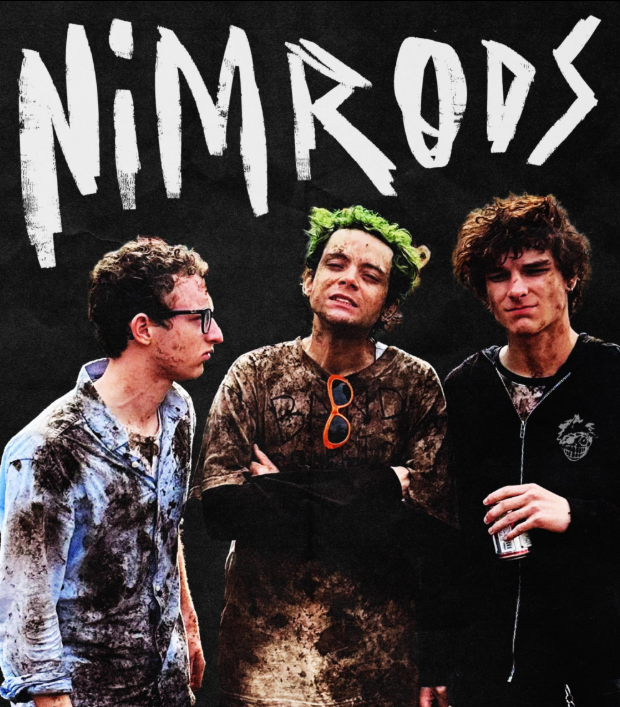
Directed by Lee Kirk, “Nimrods” follows Analog Dogs, a young Green Day-obsessed punk band, as they travel to California to open for the rock icons while trying to find their footing amid friendship, ambition, mistakes, and alienation. For a Green Day fan, that makes the movie inherently personal, but what makes “Nimrods” work is that it never feels like it is relying solely on nostalgia.
I found Green Day when I was a teenager, at a time when I was still figuring out which parts of myself were permanent and which parts I was trying on. When you’re a teenager, everything feels bigger than it probably is, but sometimes the right song can make you feel like someone else has already figured out how to say what you couldn’t. Green Day became that for me.
I, of course, already knew the hits — “Basket Case,” “Good Riddance (Time of Your Life),” and “American Idiot,” but I became interested in everything beyond them. I started listening to all of the albums, listening to each one from front to back until I worked my way through their entire discography. It didn’t take long before I was completely, almost embarrassingly, in love.
I understood the rebellion and reflection inside “American Idiot” and the dreadful anger of being restless inside your own life that hung over “Insomniac.” Singer Billie Joe Armstrong was one of the first artists I saw myself in, not because our lives were identical, but because there was something in the way he wrote and performed that made being angry, messy and still searching feel like something you didn’t have to apologize for.
I watched every interview. I collected all of the magazines and vinyls. “Brain Stew” was the first song I learned on guitar, and I even tried playing it slung on my hips like Armstrong’s famous posture, convinced that was the missing ingredient between me and looking cool. I turned every school project I could into an excuse to write about Green Day. I talked about their music, scandals and history so often that I probably made it impossible for anyone around me to forget that the band existed.
So watching Tommy, played by Mason Thames, in “Nimrods” felt almost uncomfortably familiar. His bedroom was covered in the same Green Day, Misfits and Operation Ivy posters I had on my walls as a teenager. They were used as visual evidence of a kid trying to construct an identity out of the music that made them feel understood. Some of those posters are still on my walls now. There was something eerie, yet dignifying, about seeing a version of my teenage bedroom reproduced on a movie screen.
But Tommy isn’t a stand-in for every alternative teenager who has ever covered their bedroom walls in posters. He is restless, imperfect and still trying to figure out who he is. That humanity is important because Green Day has always been more interesting to me as a group of people than as untouchable punks. Green Day has never been particularly interested in pretending they got everything right. Their history is full of mistakes, struggles, anger and addiction, and they have always been remarkably open about those things.
“Nimrods” extends that same honesty to Analog Dogs. The band isn’t romanticized simply because it is a band. Tommy, Fred and Chad fight, make bad decisions, disappoint each other and struggle with the possibility that the dream they’re chasing might not work out. The movie understands that difficult parts of becoming a person don’t disappear just because you have a dream and a guitar in your hand.
The film is also particularly mature in the way it handles parental death. Armstrong’s own adolescence was profoundly shaped by the death of his father, whose loss became one of the formative sources of pain that would later find its way into his songwriting and the music Green Day created. With that history, there is an understandable temptation to view any story about a young musician experiencing grief through the lens of Armstrong’s life. Yet, “Nimrods” resists that temptation.
Armstrong and Kirk treat parental loss with restraint, allowing it to be painful without turning it into spectacle. The grief isn’t simply there to explain why a character becomes angry or why a song eventually gets played. It is allowed to be complicated — something that changes a person without neatly defining them.
“Nimrods” recognizes that sometimes the things that hurt us become part of who we are without becoming the entirety of us.
All of the cast makes those imperfections believable. Thames is already an incredibly talented actor, but Klyr Coffman, Ryan Foust, Mckenna Grace, Keen Ruffalo and the rest of the cast deserve their flowers, too. They capture the awkwardness of young people who are not yet aware of how formative their friendships, mistakes and obsessions will become. Their chemistry keeps the movie grounded when its story could drift too far into the rock-star cliché.
The Green Day soundtrack is, unsurprisingly, perfect. The needle drops feel intentional rather than decorative, with songs arriving at exactly the right moments to give scenes an extra jolt of recognition. However, the most effective use of Green Day’s music comes during the film’s climax when “Wake Me Up When September Ends” enters the story. The song already carries an enormous amount of emotional history, but placing it at the film’s emotional breaking point gives it another dimension. It doesn’t feel like a song being inserted to tell the audience how to feel.
That is part of the strange power of Green Day’s music — the songs can belong to a moment, but they also seem capable of surviving it.
Throughout “Nimrods,” there are obvious nods to Green Day’s iconic moments, my favorite being when Analog Dogs starts a mud fight onstage, which is an obvious wink to the punk band’s infamous performance at Woodstock ‘94. Moments like that are fun for fans, but the film never punishes viewers who aren’t as familiar with Green Day’s history. By the end, though, the nostalgia gives way to something more affecting.
The film closes with actual analog photographs of Green Day in their earliest days of touring. Seeing those photographs after spending the film watching another band struggle to find its footing was unexpectedly emotional. There they were — young, sweaty, scrappy and nowhere near the band they would eventually become. Green Day looked less like rock stars than kids I had spent the last two hours watching. They were uncertain, ambitious and completely convinced that music could change their lives.
That is what “Nimrods” understands so well, as it isn’t really interested in the moment someone becomes successful. Instead, it is interested in the mess around it. Green Day and “Nimrods” taught me that you don’t need to have yourself figured out to start becoming someone. You can be angry and hopeful, lost and ambitious, scared and loud all at once. You can make mistakes and still keep going. You can outgrow one version of yourself without abandoning the kid who needed that version to survive.