

The 2020s have been populated by filmmakers doing their big, uninhibited, ambitious works they’ve spent most of their careers trying to make; the nightmarish insanity of Phil Tippett’s “Mad God” or the “what the hell did I just watch?” of Francis Ford Coppola’s “Megalopolis” comes to mind, and besides the aforementioned “Mad God,” there haven’t been many of these that are animated.
Unfortunately, not everyone with a big idea has an incredible one, and not all of them are screened on projectors with burnt bulbs causing a blue tint on every image; so my worries lingered as I entered my least favorite theater in my college town. Fortunately, the annoyance of the theater did not affect the film, as “Wildwood” is a revolution for the art of animation.
“Wildwood” follows Prue McKeel, played by Peyton Elizabeth Lee, a teenage girl who finds her hipster father’s tales of the fantastical “Impassable Wilderness” to be nothing more than childlike fairy tales. She’d rather sit around listening to The Decemberists in her room, a relatable feeling, than hear about a land of magic. One day, McKeel’s parents leave her in charge of her little brother. While they’re out, he’s kidnapped by a murder of crows (yes, that is what a group of crows is called), sending McKeel and the awkward Curtis, played by Jacob Tremblay, into the mystical lands her father spoke of to save her little brother.
Almost immediately, the Portland, Oregon setting is the first of many times when the sets overtook me with emotion. There’s a true love for the city. Little art shops everywhere, buskers playing on the streets, cute cafes on the corner; at some point, a man on a unicycle wearing a Darth Vader mask and playing the “Imperial March” on a bagpipe shooting flame rides by, and it’s treated almost as an “Oh, the usual weirdness of the day” moment. It’s crafted with a level of detail only people who truly love a place can do and in return made me love the place too.
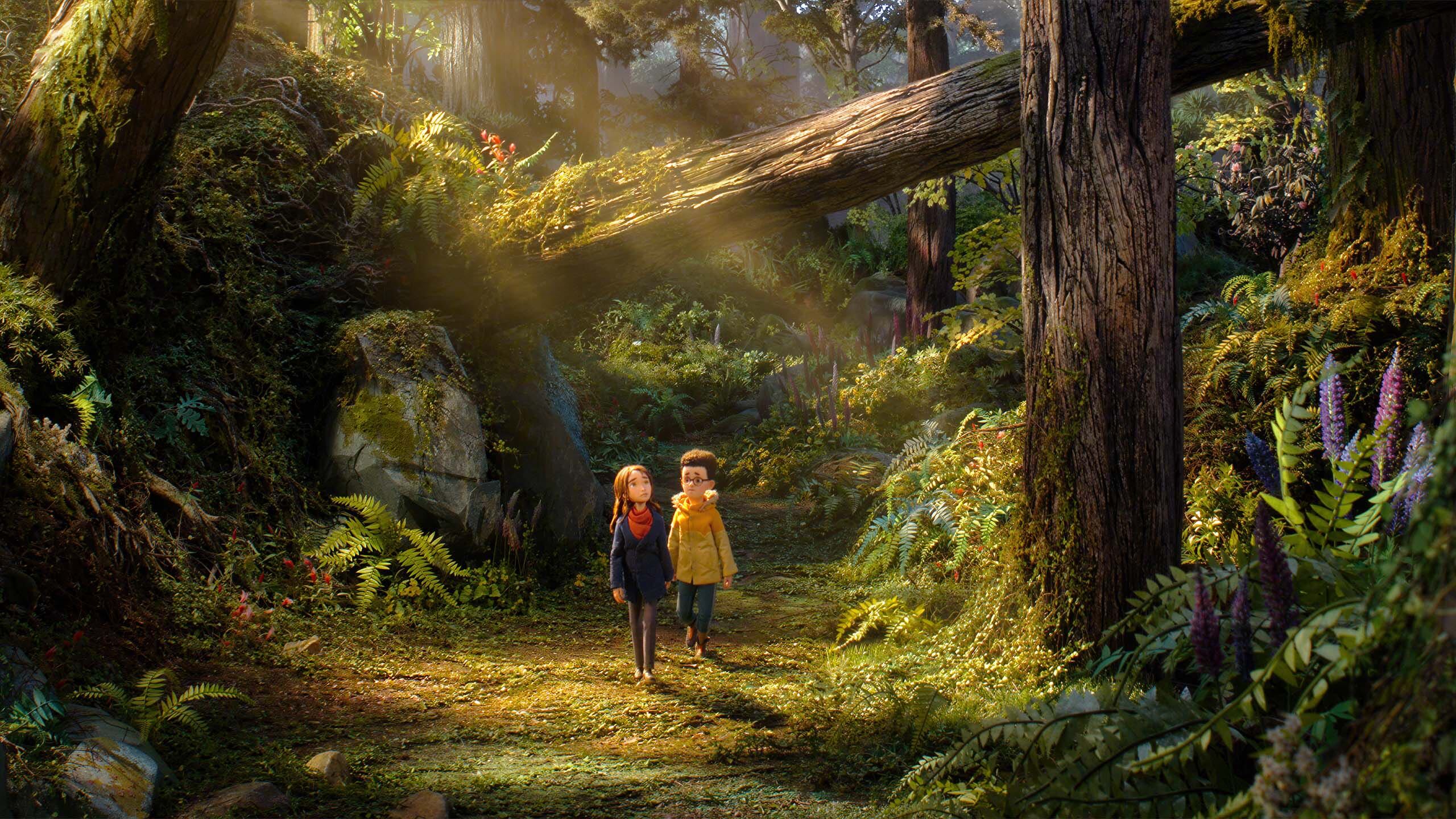
But the majority of the story doesn’t take place in Oregon; instead, we spend most of the runtime in the fantastical “Impassable Wilderness,” or as it’s called by the inhabitants, Wildwood. Stuck somewhere between medieval and Revolutionary War times, the world mixes ruined castles and old-timey manors seamlessly. Handcrafted by 1000 artists who designed 132 sets and 233 puppets, they craft a world of colossal scale that constantly left me breathless.
The film recognizes that these sets hold power. The camera loves to stay at a distance, allowing the viewer to bask in the beauty of the world and its strange residents. Cinematographer Caleb Deschanel loves to let the light shine through openings, creating wonderful rays of light to spill out into the grand spaces.
Inhabiting that world is an eclectic cast of characters coming in and out of McKeal’s adventure. The film brings together a perfect mix of big-name talent and personal favorite actors of mine to have a real winning ensemble. Carey Mulligan brings heart and terror as the main villain, Alexandra; she’s the standout performance for me personally. Against her is Brendan, played by Mahershala Ali, who brings a power to the leader of the bandits trying to protect their home few others could do. On the personal side of actors I like, Charlie Day and Jake Johnson are on the short list of actors who, if they are in something, I’m very likely to watch it. Day gets to have a lot of fun, especially in the third act, as the inept Dmitri, while Johnson gets a more emotional turn as Prue’s father.
The film takes its time building to its big set piece, really allowing the viewer to explore the setting and characters. Some may find it slow, but I can accept a slower pace if it means getting to look at all these stunning locations and building to one big moment.
Ultimately, it all builds to one pivotal moment: a war for the bandits’ land. A giant final battle comparable to the likes of “Lord of the Rings” or “Braveheart,” but now done with stop-motion puppetry. 3000 hand-animated puppets brutally tearing each other apart. It’s a violent, yet impressive display of human talent. I had heard from early critic reviews how incredible this moment was, yet I wasn’t ready for it. I spent the entire sequence on the edge of my seat, completely captivated by the disturbing beauty being achieved; it was unlike anything I’ve ever seen.
That’s what makes “Wildwood” truly special in my eyes. Even if it’s a familiar story and takes its time building itself. The art of animation has evolved in terms of what the world believes can be achieved. It’s an insanely ambitious monolithic work that reminds us all, in such dire times, that human creativity has no limit; all it takes is using your hands to do it.