Student interns shine at UA’s Fashion Archive
The Fashion Archive opens its doors in new documentary, showcasing its century-spanning collection and student research.
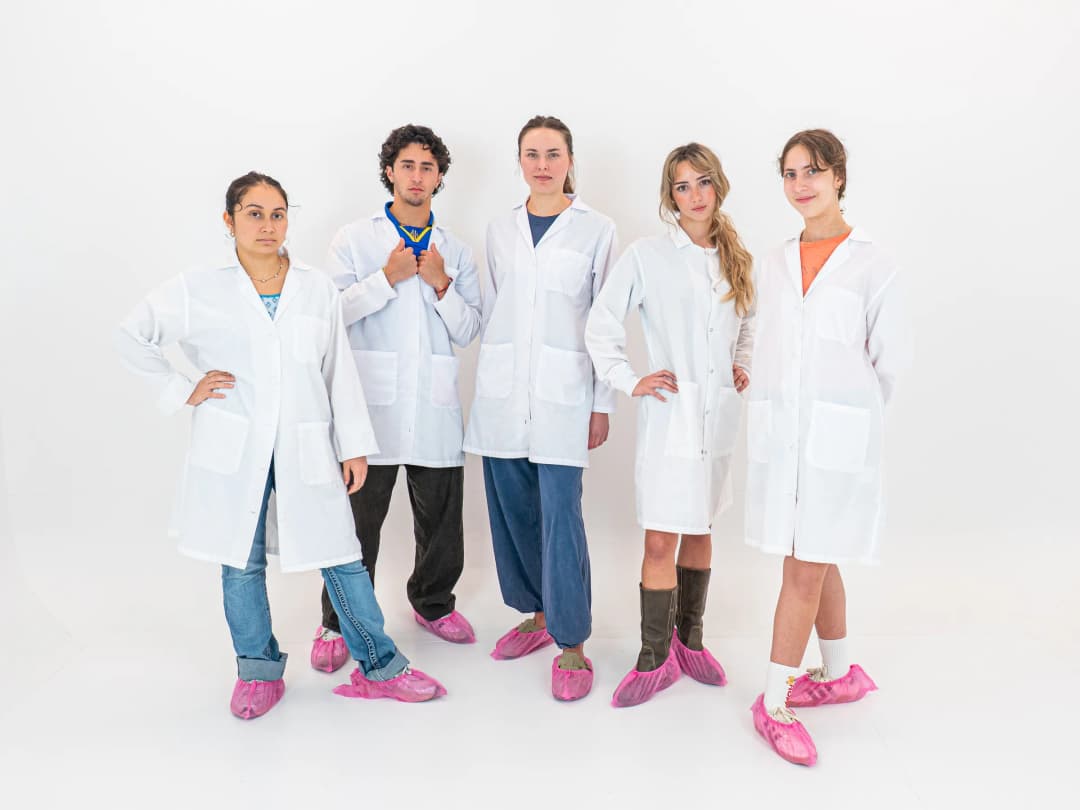
ln the basement of Drummond Lyon Hall at the University of Alabama, student interns can be found working diligently on their research in crisp white lab coats. In pairs of pink latex gloves, they carefully open drawers and cases that hold their scientific specimen. However, the research they do is a bit more eye-catching than one might initially expect, as they focus on the vintage garments and textiles housed within UA’s Fashion Archive.
The Fashion Archive at the University of Alabama is a state-of-the-art fashion research institution started in 2018. It is home to over 8,000 clothing pieces that date all the way from the 15th century.
The heart of The Fashion Archive lies in its interdisciplinary internship program where students of all majors apply for a year-long, self-led research project. At the end of their process, interns participate in the UNBOUND documentary series where they share their research process over the course of their time at the archive.
Thaïs Drewelow, a junior majoring in apparel design and Italian, is one of the interns to be featured in next year’s UNBOUND documentaries. Her work at The Fashion Archive centers around tracing the origins of a set of embroidery samples by French atelier Maison Vermont that the school formerly had in an unmarked box in their collection.
“I feel like UNBOUND is the way to show it's really us who are doing the research and putting in the work,” Drewelow said. “It's just kind of a more creative and dynamic way to put our project that we worked on for an entire year into a three-minute video.”
Thalia Cosyleon is a junior marketing major who uses her internship at The Fashion Archive as a supplement for her interest in apparel design. Her UNBOUND documentary focuses on her project researching Greta Plattry, a German-American fashion designer who achieved Cosyleon’s own goal of owning an apparel design business.
“This is an unpaid internship, so we get what we put into it,” Coslyeon said. “When we come in, we come in because we want to be here, and because we want to learn more about fashion — about whatever it is we're researching.”
Part of the appeal of The Fashion Archive internship comes from its ability to merge various disciplines with the hands-on study of clothing and textiles. Marcy L. Koontz, the faculty curator of The Fashion Archive, places an emphasis on the ability of the internship to relate to a variety of fields and give necessary experience for any workplace.
“Dr. Koontz is always saying that you can connect fashion to everything, and I feel like the more time I spend in the archive, the more I realize that,” Drewelow said.
For Alex Jorns, a junior majoring in mathematics, fashion was not originally a career plan. However, since interning at The Fashion Archive, she has had the opportunity to present her research on computational textile color modeling in Rome.
“Eventually I would love to be a data scientist for L'Oreal or Estee Lauder or a fashion brand,” Jorns said. “Having a way to kind of get some fashion experience while also benefiting my math and computer science was really important to me.”
Beyond just hands-on experience, The Fashion Archive also gives a sense of belonging to the close-knit team of interns. Nicole Malone, a junior majoring in psychology whose work cataloging 15th century European textiles will be featured in the UNBOUND series, said the archive gives her a purpose at UA.
“I really wanted to transfer schools,” Malone said. “I started this and I was like, ‘So this is why I'm supposed to be here, right?’ This is what makes going here actually fun for me.”
The 2025-2026 intern UNBOUND documentaries are now live. Tours of The Fashion Archive can be scheduled through their website.
Anthony Prentice, a fifth year majoring in fashion design, hopes that by visiting the archive and watching the UNBOUND documentaries people gain a deeper appreciation for how fashion impacts their daily lives.
“Everyone wears clothes, and to a degree, everyone wants to look nice, whether that's personal or for societal pressures or to impress someone else. Everyone has a connection with clothes. So at the very least, it's just a nice place to come and see.”
Editor’s note: This story was corrected Oct. 11 to indicate that Prentice's work would be featured in this year's documentaries.